
The Riverbend journal
Two familiar styles. A different place in your working wardrobe.
8 min read
Start with your office dress code: an Oxford is the conventional choice for formal business dressing, while a penny loafer can work where business casual is accepted. Then consider the trousers you wear, your recurring meetings and the fit of the exact pair. Here, EDEN Black Toe Cap Oxford and MARCELLO Tan Full Strap Penny Loafer make the differences easy to see, with styling ideas from Riverbend’s Instagram and original product views for the details.
At a glance
- Formal office or conservative meetings: start with an Oxford.
- Business casual and tailored separates: consider a penny loafer.
- Choose the exact model and size after checking your workplace requirements.
The quick comparison
| Your working day | Option to consider | Check before choosing |
|---|---|---|
| Formal business dress | A restrained Oxford | The dress code for your role and client meetings |
| Business casual with chinos or separates | A penny loafer | Whether slip-on footwear is accepted |
| A week with different dress requirements | Compare both styles | The most formal situation you regularly need to cover |
Start with the office, then the outfit
Think about an ordinary week before choosing the shoe. Do you wear a suit most days, tailored separates for internal meetings, or chinos in a relaxed workplace? Those situations give the decision a useful starting point. General style conventions help, but your employer’s expectations should decide what is appropriate for work.
Include the appointments that happen regularly. A business-casual office may still expect a more formal outfit for a client presentation. If the wording is simply “professional footwear”, clarify whether penny loafers are accepted for those meetings. That small check is more useful than buying a shoe around an occasion you rarely attend.
Further reading: josbank.com 1
Recognise the difference at a glance
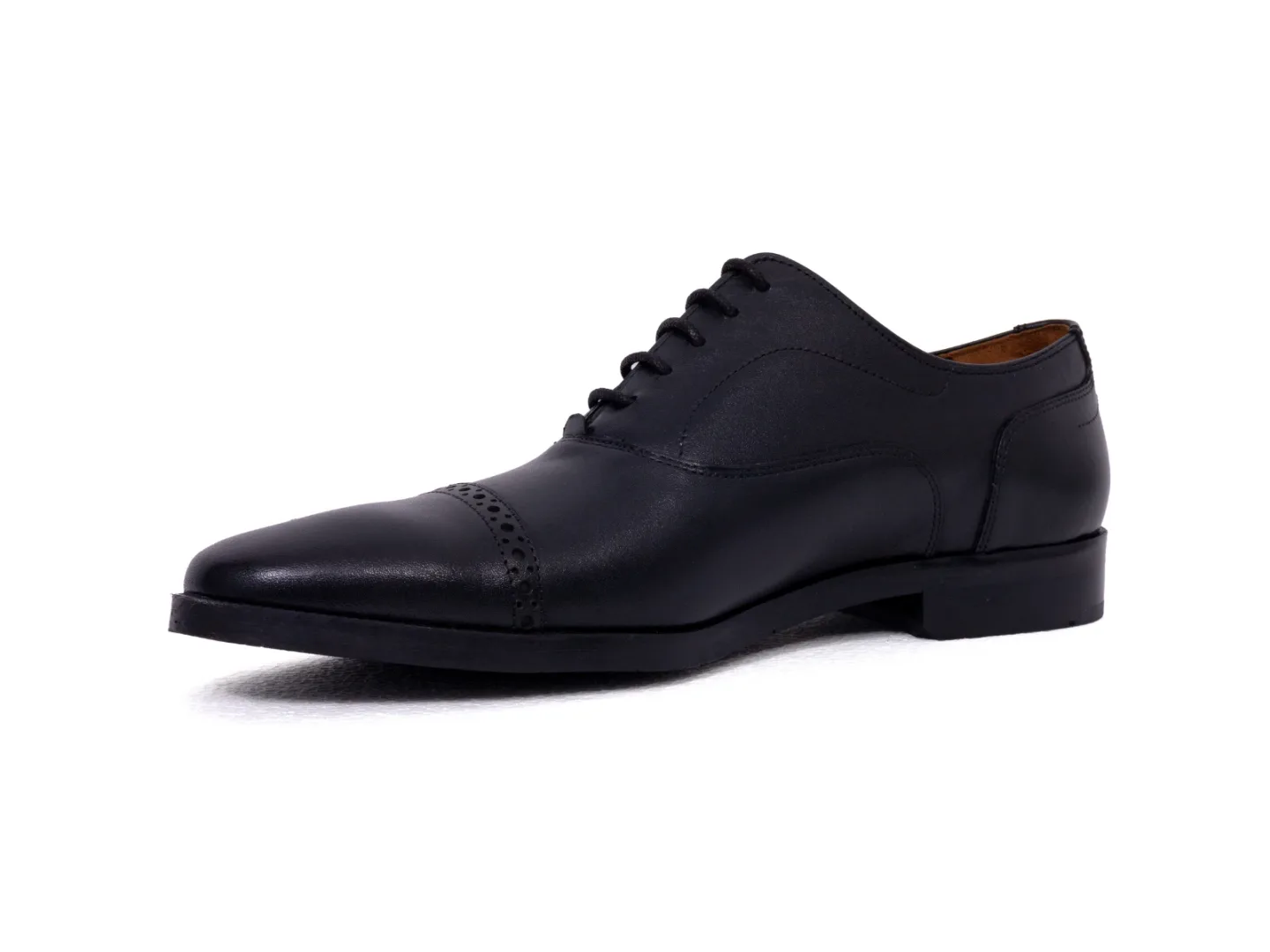
An Oxford is identified by its closed lacing; a loafer is a slip-on without laces. That distinction gives each style a different visual rhythm. With an Oxford, the lacing and toe shape draw the eye along the shoe. With a penny loafer, the strap and opening across the upper become the main features.
EDEN provides the laced, toe-cap example here. MARCELLO has the full-strap penny-loafer design. Compare the original product views for the fastening and shape, then use the styled images as outfit inspiration. The names tell you about the category; the individual product page provides the details of the pair you are considering.
Colour is a separate decision in these examples. EDEN is black and MARCELLO is tan, so the images show a colour contrast as well as a difference in style. If you want to compare only the silhouettes, look at the same colour in each category before deciding.
Further reading: clarks.com 1 · riverbendshoes.com 2 · riverbendshoes.com 3
For a more formal day: the Oxford
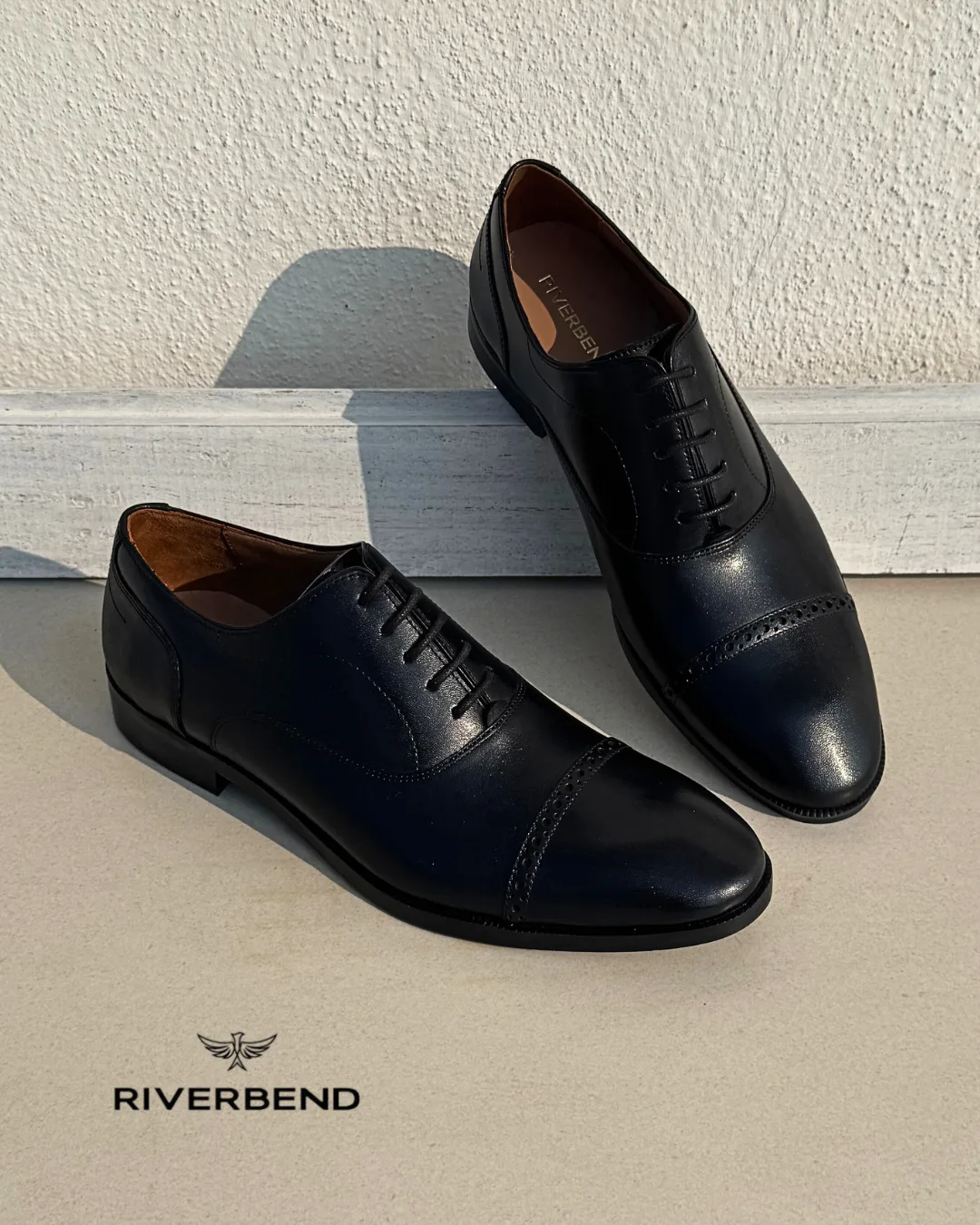
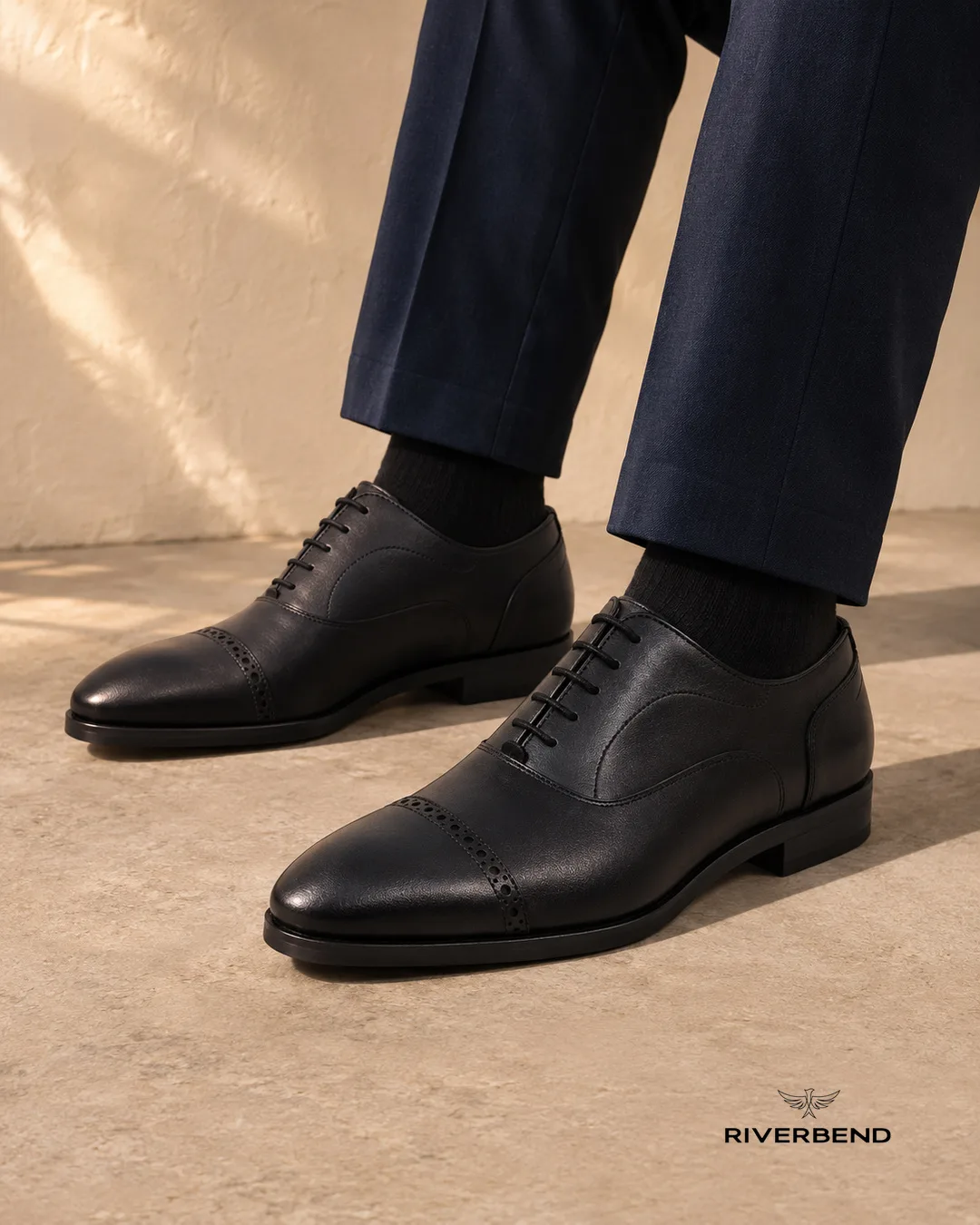
A black Oxford is a conventional starting point when formal business dress is required. The EDEN styling illustration pairs black shoes with dark tailored trousers and dark socks, keeping the lower half of the outfit restrained. Notice the trouser hem and how clearly the shoe’s profile remains visible.
For your own wardrobe, compare the shoe with the suit or trousers you actually wear to work. Keep the overall level of formality consistent, and check the requirements of the occasion rather than assuming every lace-up is interchangeable. Decorative details, finish and shape still affect how a particular design reads.
Consider EDEN if a black toe-cap Oxford meets that need. Its product page is the place to review the exact model and its sizing information. A formal appearance can guide the outfit decision; fit still needs to be assessed for your own feet.
Further reading: riverbendshoes.com 1
For business casual: the penny loafer
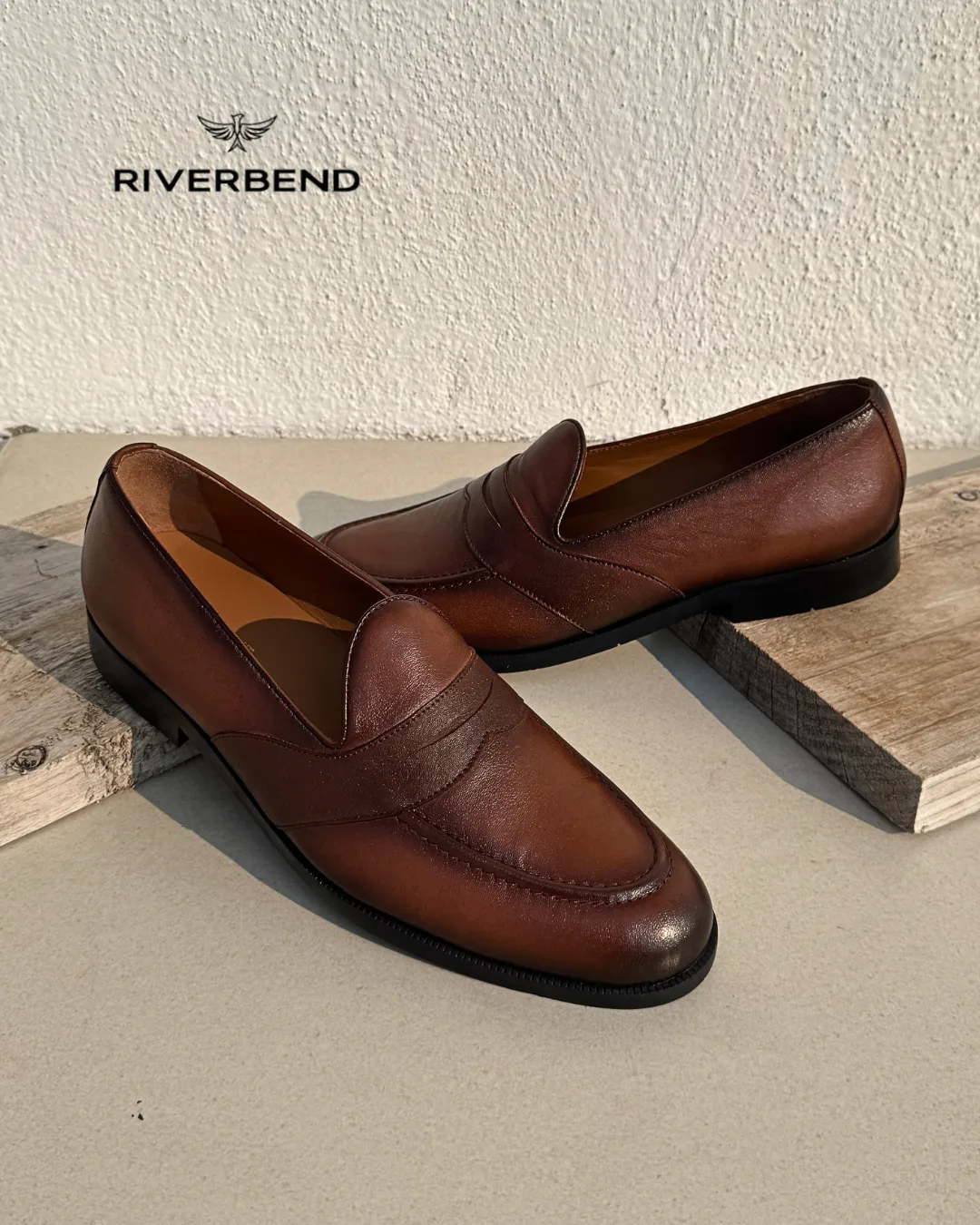
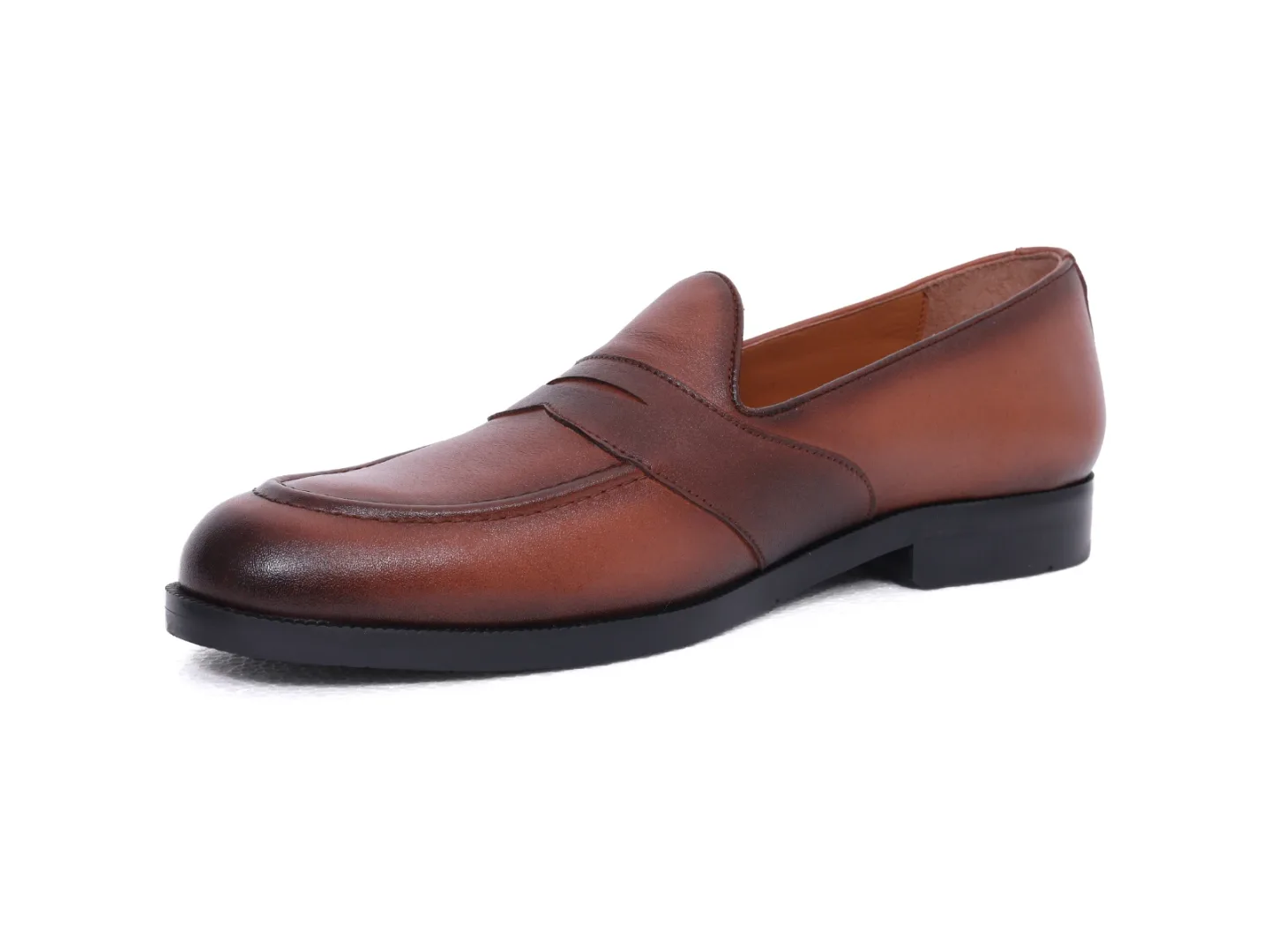
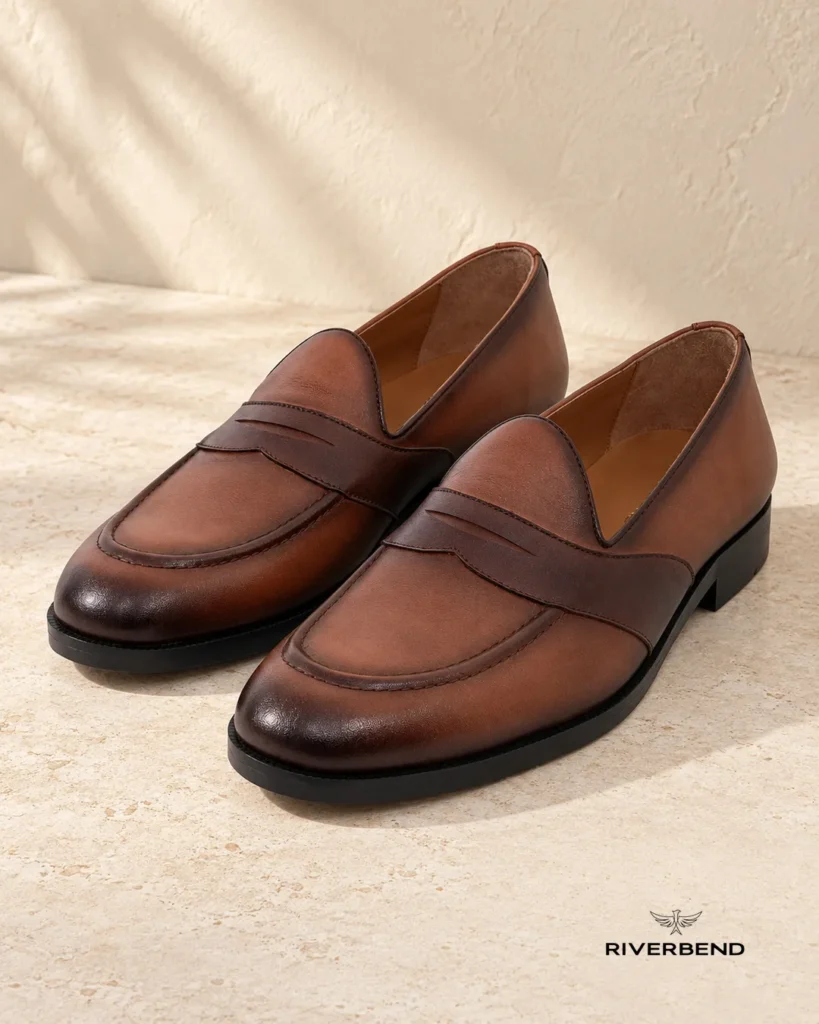
A penny loafer offers a different option when the workplace permits a more relaxed standard. The MARCELLO image from Riverbend’s older Instagram archive shows the full strap and warm tan colour against timber and a light textured wall. Use the styled scene to compare colour and design; the accompanying original product view lets you inspect the actual silhouette separately.
For a relaxed office outfit, try tan loafers with navy tailored trousers or chinos and a simple shirt. Look at the complete combination, including your socks and trouser length, rather than treating the shoe as an isolated purchase. Keep the palette simple so the warm leather colour has room to stand out.
MARCELLO is a relevant candidate if your office accepts penny loafers and you prefer that strap detail and slip-on format. For conservative meetings, check whether the same choice is suitable or whether your usual formal lace-up would be more appropriate.
Further reading: riverbendshoes.com 1
Make socks and trouser hems part of the outfit
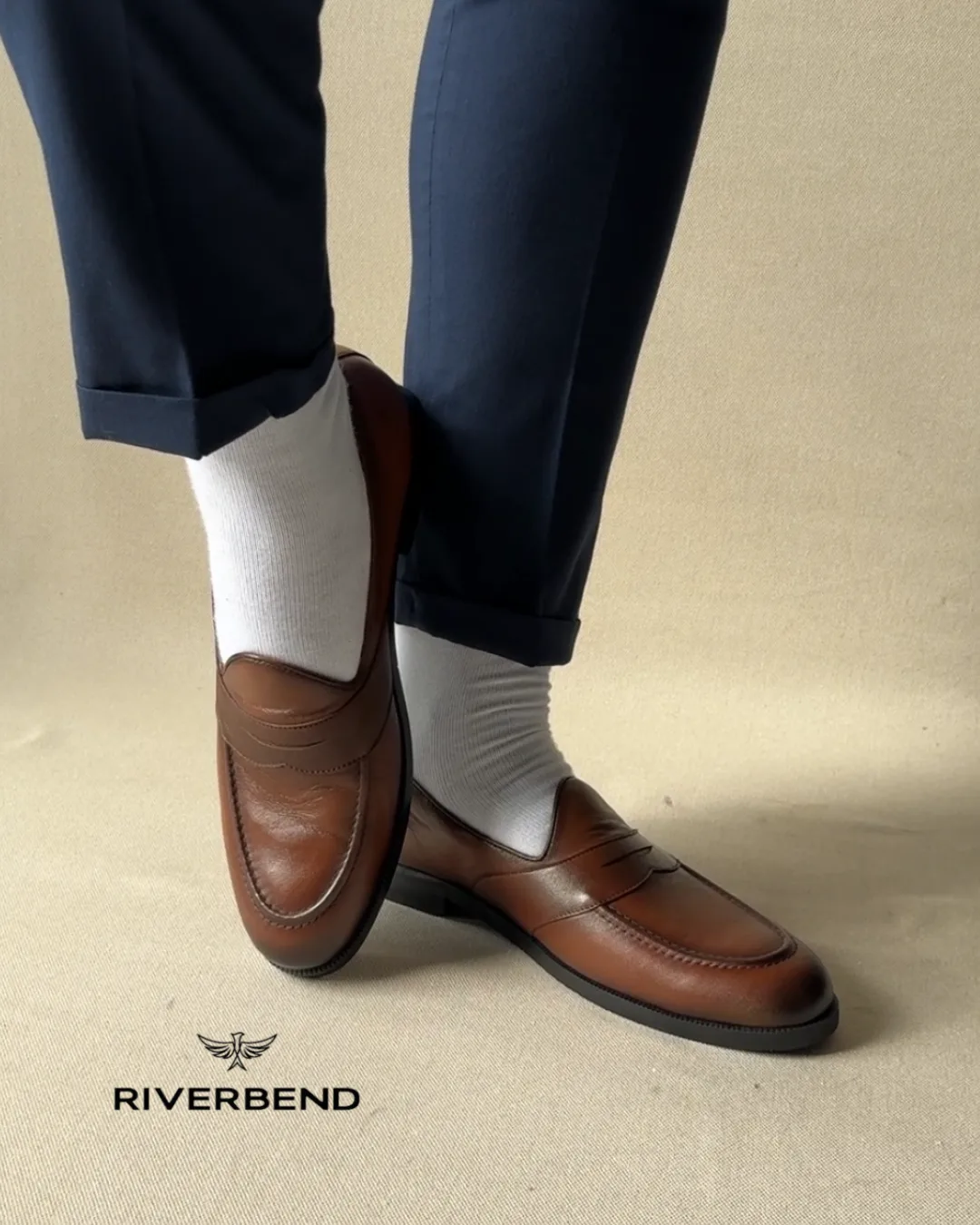
The archive example pairs tan penny loafers with navy trouser cuffs and white socks. The light socks make the space between the trouser hem and shoe a visible part of the outfit. It is a deliberate contrast, so decide whether that is the effect you want before copying the combination for work.
For a quieter starting point, try socks close to the trouser colour and compare the result in a full-length mirror. Then try the contrasting pair. Keep the shoes and trousers the same for both checks so you can judge what the socks change. Your workplace dress expectations should decide which version is suitable.
Look at the outfit while standing and sitting. A hem that looks right in one position may reveal more sock in another. Check that the result feels intentional to you, and that fabric is not hiding the shoe detail you wanted to show. The illustration offers a styling idea; it does not establish fit or comfort.
Plan a working week around real occasions
Use your calendar to turn the comparison into an outfit plan. For a recurring formal meeting, put together your usual suit or tailored trousers with the Oxford first. For an ordinary day when your office accepts loafers, compare the same trousers with the penny loafer. Write down which combination meets each requirement before buying another pair.
Keep a small set of outfit photographs for yourself, taken in the same light. A front view and a side view can help you compare trouser hems, sock contrast and the amount of shoe showing. Those photographs are a record of your own styling preferences, rather than a test of a shoe’s performance.
If one option leaves an important day uncovered, that is useful information. You can prioritise the pair needed for that day, then consider a second style later. This gives each purchase a clear job and avoids building a collection around combinations that do not suit your actual working week.
- List the dress requirements that recur each week.
- Build one complete outfit for the strictest regular occasion.
- Compare your second option using trousers you already own.
- Check the exact model and selected size before ordering.
Let fit finish the decision
Once both style and dress code are settled, check the exact model’s sizing guidance. A slip-on format and a laced format are different designs, but neither category name determines your size. Avoid automatically sizing down for a loafer or assuming that a number from another brand will settle the question.
Read the product details, compare any available measurements and ask about an unanswered fit question before ordering. Check your chosen size on the current product page, because the available options can change. Keep that check tied to the pair you want rather than a general statement about the collection.
Comfort is also individual. An attractive styled image cannot establish how a shoe will feel during a working day. Use appearance to assess the outfit and the product information to understand the model, then make a considered fit decision.
- Confirm that the style meets your workplace requirements.
- Read the exact model’s size guidance.
- Check your selected size on the live product page.
- Resolve any unanswered fit questions before ordering.
A useful way to choose your first pair
If you are buying one pair now, begin with the dress requirement that occurs most often. A formal office gives the Oxford a clear purpose. A workplace that explicitly accepts penny loafers gives you room to choose the slip-on design if it works with the outfits you already own.
For a mixed week, identify the stricter requirement that recurs. Then decide whether one pair can reasonably cover it or whether different occasions call for different options. This keeps the purchase tied to real use rather than a universal rule about which style is better.
Compare the EDEN and MARCELLO pages for the model you prefer. Check the photographs, colour and sizing details together. The right starting point is the pair that fits your wardrobe, your workplace and your individual requirements.
A few more answers
Frequently asked questions
Can I wear penny loafers to a formal client meeting?
Follow the meeting’s dress expectations. Where formal business dress is required, an Oxford is the conventional starting point. Permission to wear loafers on ordinary office days may not cover a more conservative client setting.
Are Oxfords always more comfortable than loafers?
The style name does not guarantee comfort. Fit, shape and the exact model matter. Compare sizing guidance and product information rather than judging comfort from a styled image or a category label.
Should I choose black or tan office shoes?
Start with the workplace dress code and your usual trousers. Black can be a straightforward choice for conservative outfits; tan offers a warmer contrast for many navy and business-casual combinations. Treat those as styling options and check the complete outfit.
Should I buy a smaller size in a penny loafer?
Use the guidance for the exact model. Do not automatically size down because a shoe is a loafer. Compare the available sizing information and resolve fit questions before ordering.
Can I wear white socks with office loafers?
Only if the combination fits your workplace dress expectations. The archive example uses white socks as a visible contrast with navy trousers and tan loafers. For a quieter alternative, compare socks close to your trouser colour and judge the complete outfit.
Find your next pair
Make it work for your wardrobe
Choose the style your working week calls for, then compare the exact model and its size guidance. Explore the collection to find a pair that works with the clothes you already wear.
Relevant shoes

MARCELLOTan Full Strap Penny Loafer
₹ 6,425.00 ₹ 4,499.00

EDENBlack Toe Cap Oxford
₹ 6,425.00 ₹ 4,499.00

MARCELLOBlack Full Strap Penny Loafer
₹ 6,425.00 ₹ 4,499.00

EDENTan Toe Cap Oxford
₹ 6,425.00 ₹ 4,499.00

CARRINGTONBlack Belgian Loafers
₹ 6,570.00 ₹ 4,599.00

KENSLEYBlack Belgian Loafers
₹ 6,570.00 ₹ 4,599.00
Comments (2)
Awesome Info, Really Helpful